GCSE science preparation is now under way for learners working towards exams in May or June 2027. October is a useful time to establish study habits that combine lessons and revision with opportunities to explore science in practice.
Reading notes and reviewing scientific ideas are important parts of preparation, but practical activity can add another dimension. Carrying out an experiment gives learners an opportunity to follow a method, make observations and consider how the results connect with the science they are studying.
Why include practical science in home study?
Practical work encourages learners to take an active role. Instead of only reading about an investigation, they can think carefully about its purpose, follow each stage and observe what happens.
This can also prompt useful conversations between young people and the parents, grandparents or home-educating adults supporting them. What was the experiment designed to investigate? Which factors changed? What needed to stay the same? Were the observations expected, and what might they mean?
These questions help make the practical part of a wider study routine rather than an isolated activity. They also encourage learners to think about how they would describe an investigation and answer questions about experimental techniques.
A simple checklist for approaching a practical
Before starting, allow enough time to understand the activity rather than rushing straight into the experiment. Learners can use the following checklist:
- Identify the aim: What is the practical intended to investigate?
- Read the instructions: Review the complete method and all relevant safety guidance before beginning.
- Consider the variables: What will change, what will be measured or observed, and what should remain the same?
- Carry out the activity carefully: Follow the supplied instructions and safety guidance throughout.
- Record observations: Make a clear note of what happens during the experiment.
- Reflect on the result: Consider what the observations show and how the experiment might be performed differently in a laboratory.
How grown-ups can support practical study
Parents, grandparents and carers do not need to take over the activity. Age-appropriate encouragement can begin with making sure the learner has time to read the instructions, organise what is needed and understand the relevant safety guidance.
Afterwards, ask the learner to explain the practical in their own words. Discussing the aim, method, observations and conclusion can help them review the process and identify any areas they want to revisit.
Using practicals in home education
For home-educating families following a GCSE or iGCSE science course, practical activity can be incorporated alongside the relevant topic. A practical may be used to introduce an idea, explore it during a unit or revisit it as part of later preparation.
When selecting resources, check that they are relevant to the learner’s course and needs. It is also helpful to look for a connection to the UK science syllabus, clear instructions and supporting material that encourages learners to think about both the activity and related exam questions.
Explore Key Stage 4 Required Practicals kits
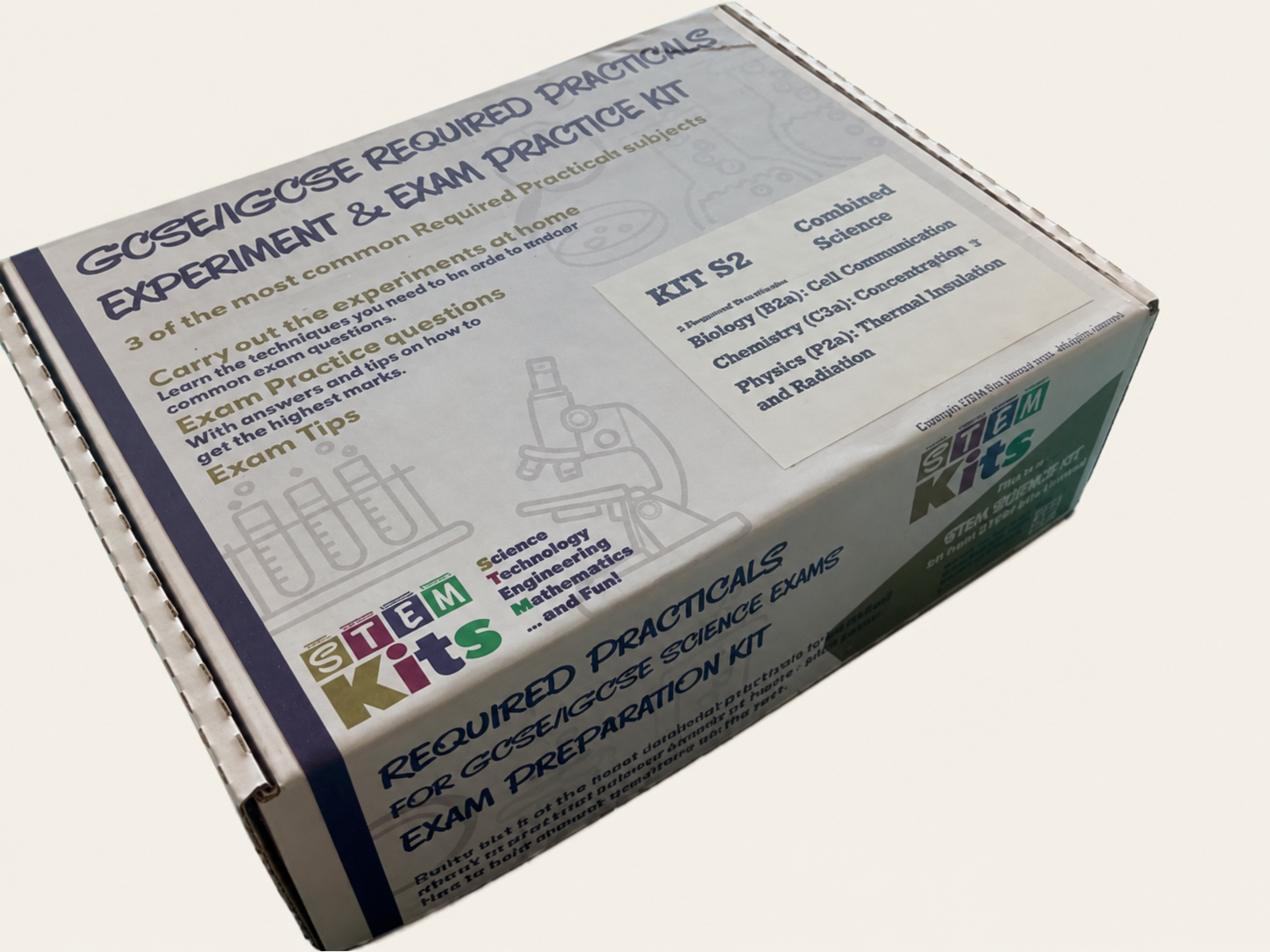
STEM Kits offers three different Key Stage 4 Required Practicals experiment kits for learners aged 15–16. Each kit includes everything needed to carry out three commonly asked-about Required Practicals safely at home, together with full instructions, key points about how the experiments might be performed differently in a laboratory, exam tips, and practice exam questions with answers.
The kits are linked to the UK science syllabus, made in the UK and supplied with clear instructions. Each kit costs £79.99 and includes free UK mainland postage.
Visit STEM Kits to explore the Key Stage 4 Required Practicals experiment kits and choose an appropriate practical resource for your learner’s GCSE or iGCSE science studies.
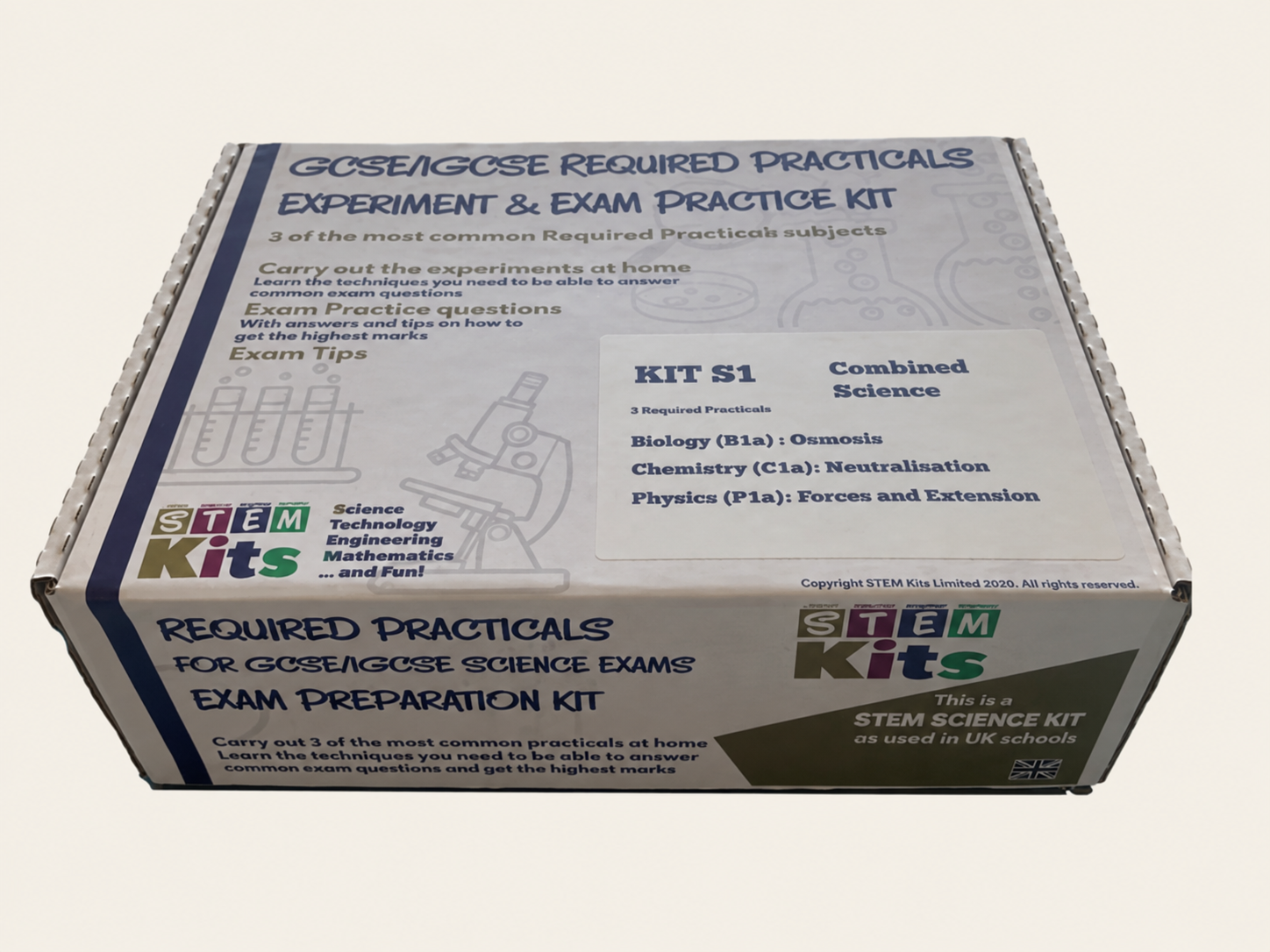
Buy the Science Kit 1 for £79.99 with FREE UK mainland postage.
Buy the Biology kit for £79.99 with FREE UK mainland postage.