Practical STEM activities can give people an opportunity to explore an idea by building, testing or experimenting. For companies, organisations and charities, they can also form part of a wider outreach, corporate social responsibility, community engagement or fundraising initiative.
However, the right activity depends on the people taking part, the setting and the organisation’s objectives. This is where a bespoke STEM kit may offer a useful alternative to selecting a standard product.
What is a bespoke STEM kit?
A bespoke STEM kit is developed around an organisation-led idea rather than chosen solely from an existing product range. The starting point is a conversation about the audience, purpose and setting, followed by consideration of the potential project scope before any specification or delivery commitment is made.
This conversation might cover what participants should understand, build or experience, as well as the relevant science or electronics theme. The activity format, supporting content and presentation requirements can also be discussed alongside practical considerations such as timing, approximate quantity and delivery context.
Why consider a tailored approach?
Beginning with the organisation’s objective helps to keep the discussion focused on what the proposed activity is intended to support. It also allows several important factors to be considered together rather than treating the kit as a standalone item.
A tailored discussion can consider:
- The intended audience: who will take part and what type of experience is appropriate for them?
- The desired outcome: what should participants understand, build or experience?
- The setting: will the activity form part of outreach, an event, a workshop, a community activity or another campaign?
- The organisational context: how should the idea relate to the organisation’s wider engagement objectives?
- The practical scope: what timing, approximate quantity and delivery context need to be considered?
This does not mean assuming the final format in advance. The purpose of the initial conversation is to explore what may be appropriate and establish whether the idea is feasible.
Illustrative scenario: an outreach activity
Imagine an organisation planning a STEM outreach programme. It wants to create a practical experience but first needs to decide who will participate, where the activity will take place and what it wants people to gain from it.
In this illustrative situation, a bespoke development conversation could explore the relevant STEM theme, the type of activity and any supporting content that may be needed. Starting with the audience and engagement goal would help shape the potential direction without assuming that a standard format is suitable.
Illustrative scenario: a CSR or community initiative
A company might be preparing a corporate social responsibility or community engagement programme and considering how a STEM activity could contribute. The intended participants and setting would be important, as would the role the activity is expected to play within the wider initiative.
Here, the discussion could begin with the experience the company hopes to create. Practical requirements and presentation needs could then be considered as part of the potential scope. This is an illustrative example rather than an account of a past customer project.
Illustrative scenario: a fundraising concept
A charity or organisation might also explore whether a STEM-focused product could form part of a fundraising activity. Before deciding on a product direction, it would be useful to consider the intended supporters, the role of the product and the context in which it would be offered.
A bespoke discussion cannot determine fundraising results, but it can help the organisation consider whether its proposed STEM idea, audience and practical requirements can be brought together into an appropriate project concept.
The value of a collaborative first conversation
A useful bespoke kit begins with a clear audience, purpose and setting. Collaboration allows the organisation to explain its idea while giving the development team the context needed to discuss potential scope and feasibility.
It can be helpful to enter that conversation with a clear objective while remaining open about the eventual format. Instead of beginning with a fixed list of features, begin with the experience you want to create and the people you want to engage.
A preparation checklist for buyers
Before beginning a bespoke STEM kit discussion, consider the following questions:
- Who are the intended participants?
- What would you like them to understand, build or experience?
- Where and how will the activity be used?
- Is it part of outreach, CSR, community engagement, fundraising, an event or another campaign?
- What approximate quantity may be required?
- What timescale and delivery context should be considered?
- Are there relevant science, electronics, content or presentation requirements to discuss?
- What role should the kit play within the wider programme?
You do not need to have every detail settled before making contact. A clear outline of your audience, objective and setting provides a practical basis for an initial conversation.
Start with your objective
A bespoke STEM kit can be explored around the needs of a particular audience, activity and organisational goal. Whether you are considering outreach, a CSR or community programme, or a fundraising concept, the most useful first step is to define what you want the project to achieve.
To explore a collaborative conversation about your idea, visit www.stemkits.co.uk/bespoke-stem-kits/.
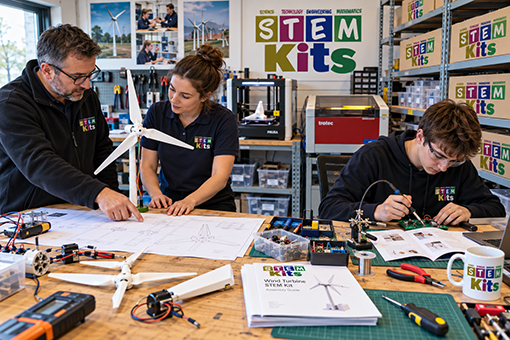
Partner with STEM Kits Limited to create your bespoke STEM kit.