Starting Key Stage 3 Science: Helping Young People Explore with Confidence
Starting science at secondary school can feel exciting, unfamiliar or a mixture of both. Some young people are keen to explore every new idea, while others may feel a little lost as they adjust to different subjects, practical work and new ways of thinking.
There is no single right way to approach this transition. Whether a child needs reassurance or is already enthusiastic about science, calm and manageable opportunities to explore can help make the experience feel less daunting.
Getting used to Key Stage 3 science
Key Stage 3 introduces young people to a broader range of scientific ideas across biology, physics and chemistry. There may be new terminology to understand, instructions to follow and observations to discuss. It is perfectly reasonable for children to have questions while they become familiar with this new stage.
Grown-ups can help by making space for those questions without turning every conversation into a test. Asking what a child found interesting, surprising or confusing can open up a useful discussion and show that curiosity matters.
Supporting a child who feels unsure
If science currently feels unfamiliar, try breaking exploration into manageable steps. Read instructions together, check what needs to be done and allow enough time for the child to work at a comfortable pace.
It can also be helpful to focus on the process rather than expecting a particular performance. Following instructions, observing what happens and describing what was noticed all provide useful starting points for talking about science.
If something unexpected happens, it does not need to be treated as a failure. Instead, ask simple questions such as:
- What did you notice?
- Was anything different from what you expected?
- What would you look at more closely next time?
- Is there a word or idea you would like to find out more about?
Giving enthusiastic young scientists room to explore
Some children begin secondary school already fascinated by science. Practical activity can give that interest a constructive focus and offer another way to engage with biology, physics and chemistry at home.
Try allowing the young person to take the lead where appropriate. They might read the instructions aloud, explain what they think will happen or describe their observations afterwards. The aim does not have to be to race ahead; it can simply be to enjoy asking questions and exploring ideas carefully.
Why hands-on science can be useful
Reading and discussion are important parts of science, but practical activity offers a different kind of experience. It gives young people something specific to follow, observe and talk about.
A clear structure can be especially helpful when a subject is new. By working through instructions one stage at a time, children and grown-ups can approach an activity together without adding unnecessary pressure.
How grown-ups can take part
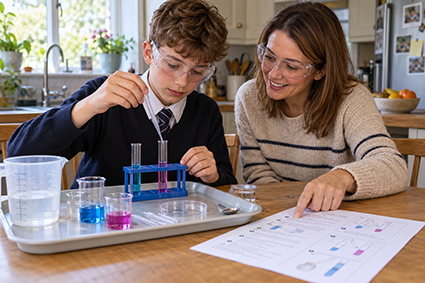
You do not need to have every answer before exploring science with a child. A supportive grown-up can help by reading the instructions, encouraging safe and careful working, and asking open questions about what happened.
Try to leave room for the child’s own observations. Questions such as “What did you notice?” or “Why do you think that happened?” encourage discussion without making the activity feel like a test.
A structured introduction to secondary-school science
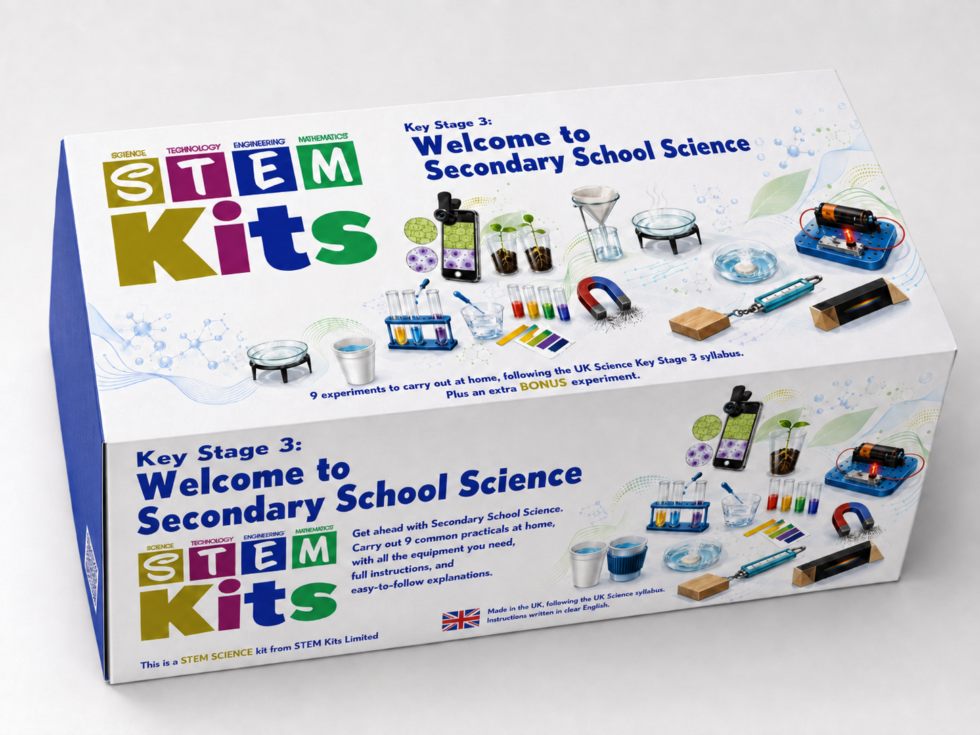
The Key Stage 3 Welcome to Secondary School Science kit is designed for students aged 11–14. It provides an introduction to biology, physics and chemistry through three experiments for each subject, plus one bonus experiment.
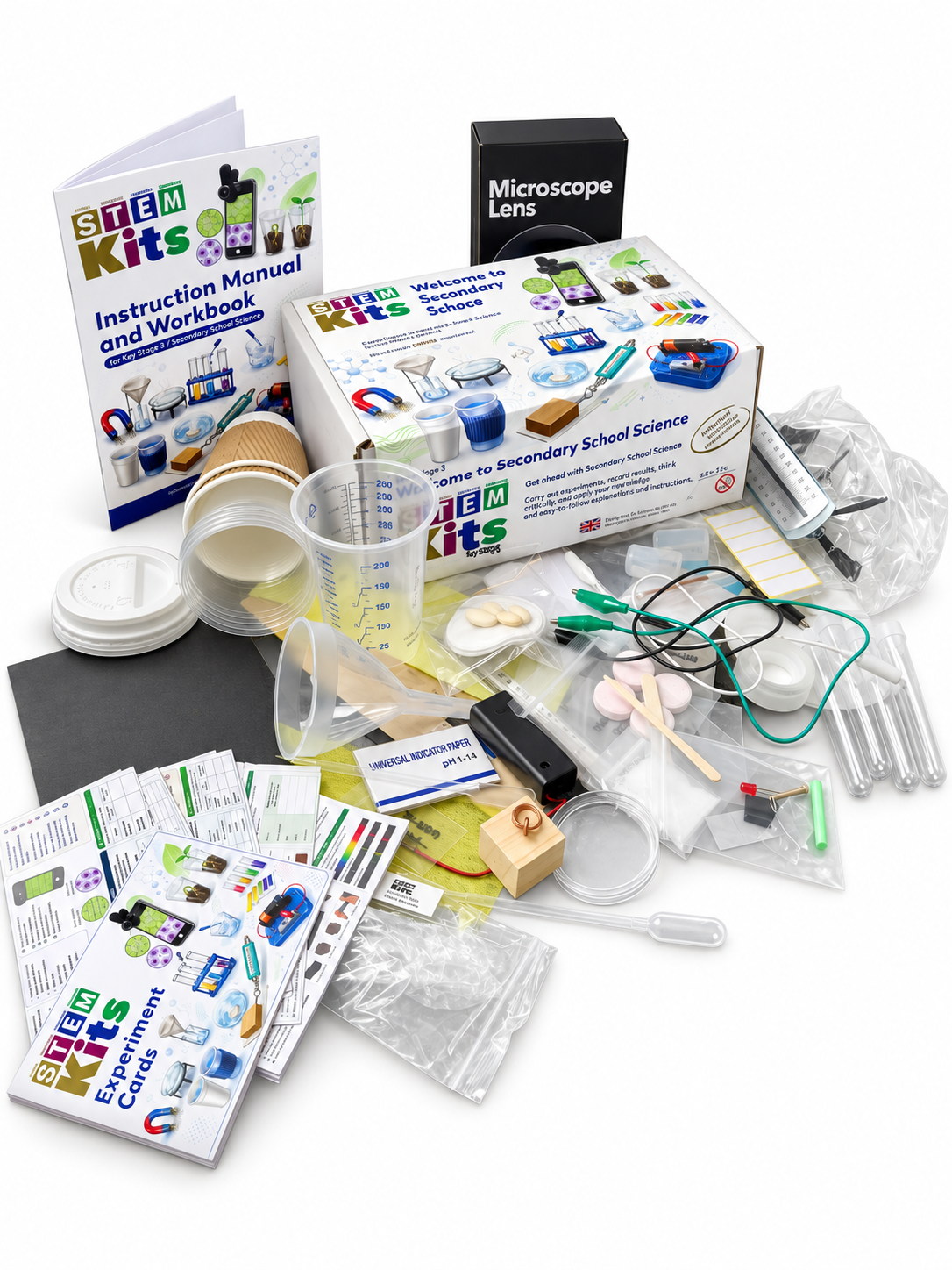
The kit is linked to the UK school syllabus, made in the UK and supplied with instructions written in clear English. It also includes everything needed to carry out the experiments safely at home.
This makes it an option for families supporting a child who has recently started secondary-school science, young people who want to explore their interest further, and home-educated students looking for structured hands-on science activities.
Find out more
Every young person approaches science differently. Offering time to ask questions, work through clear instructions and discuss observations can create a welcoming starting point for further exploration.
To see more information about the Key Stage 3 Welcome to Secondary School Science kit, visit the Key Stage 3 kit page
Buy now for £99 with free UK mainland postage.